01
Nutrition
Start by adding what is missing, often enough protein, so hunger settles and the carbohydrate conversation becomes easier.
An endocrinologist-led program that asks why, before adding the next tablet.
American Board-Certified Endocrinologist · ★ 4.8 · 236 Google reviews · 20+ years
Type 2 Diabetes remission means an HbA1c below 6.5% (the level used to diagnose diabetes) held for at least three months without diabetes medication. It is not a cure; it has to be maintained. For many people it is possible. A C-peptide blood test helps show whether remission is realistic for you.
First Consultation
The first question is not which tablet comes next.
It is whether your pancreas is still producing insulin, and what has been keeping glucose high.
Reviewed by Dr. Roshani Sanghani before the recommendation.
Reviewed before you meet
Pancreas capacity
C-peptide and insulin production
Medication pattern
Current medicines and escalation history
Daily-life pattern
Food, sleep, stress, movement, and glucose readings
Clinical possibility
Whether remission may be realistic for your case
You leave knowing
Watch: How Dr. Roshani treats Type 2 Diabetes
Most diabetes care follows the same script. The number rises, a medicine is added. It rises again, the dose goes up. Eventually, insulin.
The script can bring the number down. It does not always show why the number keeps rising.
That is what the first consultation starts with.
Dr. Roshani does not ask patients to change everything at once. The work starts with nutrition; each wheel that steadies creates the conditions for the next.
“They met me where I was. No push to do anything.”
The four wheels, in sequence
01
Start by adding what is missing, often enough protein, so hunger settles and the carbohydrate conversation becomes easier.
02
Look at sleep early because glucose, cravings, and energy often change when sleep starts improving.
03
Treat stress as biology to understand, not a character flaw to push through.
04
Bring movement in after the other wheels start turning, so it becomes easier to sustain.
Medication safety rail
As glucose comes down, medicines that were right can start becoming too strong. In India, Dr. Roshani adjusts medication directly as numbers change.
For patients outside India, she gives the clinical reasoning to bring to a local prescriber.
Have your last lab report ready
First Consultation ₹5,000 / USD 60 · Online worldwide · In-person in Mumbai
Patient proof
The proof starts with clinical markers, but it should not stop there. The important question is what those numbers make possible in daily life.
How to read these outcomes
Patient outcomes vary. Results depend on pancreas function, history, medications, and follow-through.
Blood pressure and fatty liver often improve as metabolic health improves.
In the DiRECT trial (The Lancet, 2018), 46% of people reached remission at one year through structured weight management, and 36% remained in remission at two years.
Real-life proof
The numbers matter because daily life changes with them: medicines, food decisions, travel, and confidence.
7.2 → 6.0 HbA1c
In remission without medication · Age 75
“This was achieved without any medication for diabetes. Though I am 75 now, nothing is holding me back from continuing with exercise and weight training.”
SUBHASH · GOOGLE REVIEW · TYPE 2 DIABETES
13.3 → 5.9 HbA1c
HbA1c improved · Metformin halved in one month
“My family understood that diabetes was a lifelong illness that one could only control, not reverse. I have learned, for the first time, the underlying causes of diabetes. This understanding allows me to make better choices.”
HEENA · GOOGLE REVIEW · TYPE 2 DIABETES
In remission after 20+ years
Told he must start insulin. Dr. Roshani helped him change course.
“All the best doctor's of this country has told me that you are diabetic for more than 20 years and no tablets will work on you. You must now go on insulin. She has done what she promised.”
NARENDRA · GOOGLE REVIEW · TYPE 2 DIABETES
Less medication after 18 years
HbA1c 6.8 → 6.2 · Diabetes Reversal Program
“I have been well educated and can decide what to eat in different life situations. My ultimate goal is to stop medicines completely — I think it is an achievable goal now.”
NANDINI · GOOGLE REVIEW · TYPE 2 DIABETES
A physician's son - already off two endocrinologists - stayed five months in the program. 20 kg lost. Blood sugars in normal range.
WASUNDHARA · physician and mother · GOOGLE REVIEW
“Dr. Roshani and her team managed what to me was a miracle. She managed to connect with him, and he stayed with her program for 5 months. She also helped me - by asking me to hand over all responsibility to her. That was such a relief.”
“I want to say to anyone reading this: it is never too late.”
Pravin · Age 88
55 years with Type 2 Diabetes. Rebuilding muscle, reducing medication.
Origin Story · 2013
The lesson was not that every case would respond the same way. It was that the next step should not be assumed before the pattern is understood.
In 2013, a 58-year-old man named Dinesh arrived with an HbA1c of 11.4%, four oral medications, and a referral note that called him non-compliant. Insulin was the expected next step.
Dr. Roshani did something different. She listened long enough to see the real problem: a hungry man eating 10 chapatis a day because no one had helped him build a meal that could satisfy him.
What happened
Starting point
HbA1c 11.4%, four oral medications, and insulin expected next.
Missed pattern
A hungry patient eating 10 chapatis a day because meals were not satisfying him.
Early response
Glucose dropped from 350 to below 200 within days; HbA1c later reached 6.6% on fewer medicines.
That case changed the question. Long-standing Type 2 Diabetes was not always a burnt-out pancreas. Sometimes the pancreas was still fighting. The lifestyle simply was not supporting it back.
That is why the program looks for what the current treatment may be missing before assuming the next step is more medicine.
Physician-led care
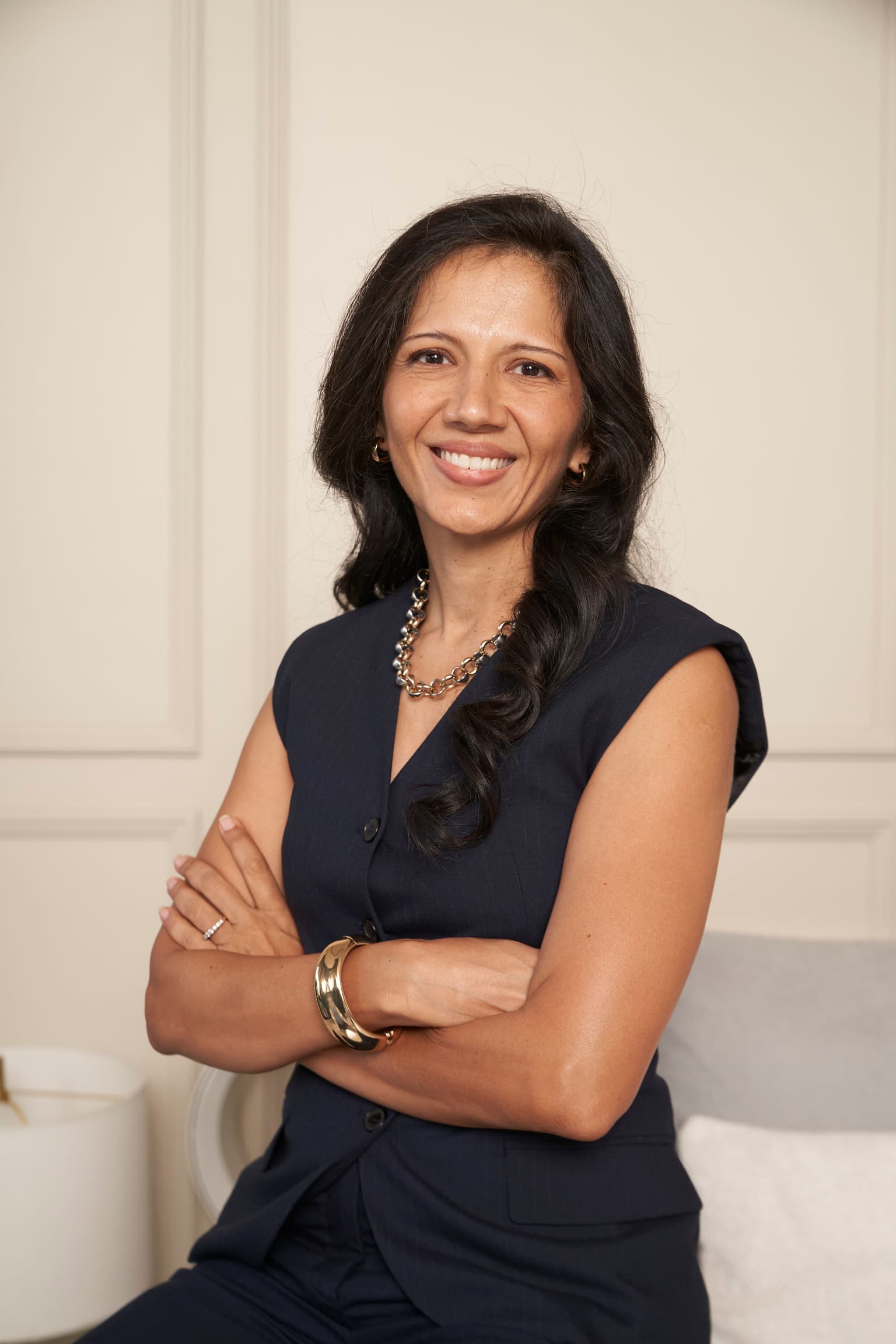
The Type 2 Diabetes program is led by an American Board-Certified Endocrinologist whose work combines clinical medicine, behavior change, and careful medication review.
“I wasn't this doctor 20 years ago. I was part of the old diabetes system: one tablet, two tablets, three tablets, four, finally insulin.”
American Board-Certified
Endocrinology, Diabetes, and Metabolism · Internal Medicine
20+ years clinical experience
Patients across 12+ countries · MINT Certified Trainer
Recommended for consultations by Dr. Eric Berg
“For those of you that need to work with a very competent physician...”
“...there's so many people out there that are on medications that need assistance - and I know you have several programs.”
- DR. ERIC BERG, IN CONVERSATION WITH DR. ROSHANI SANGHANI(“Why Do Most Indian Men Have Potbellies?” - YouTube, 2024)
Published work
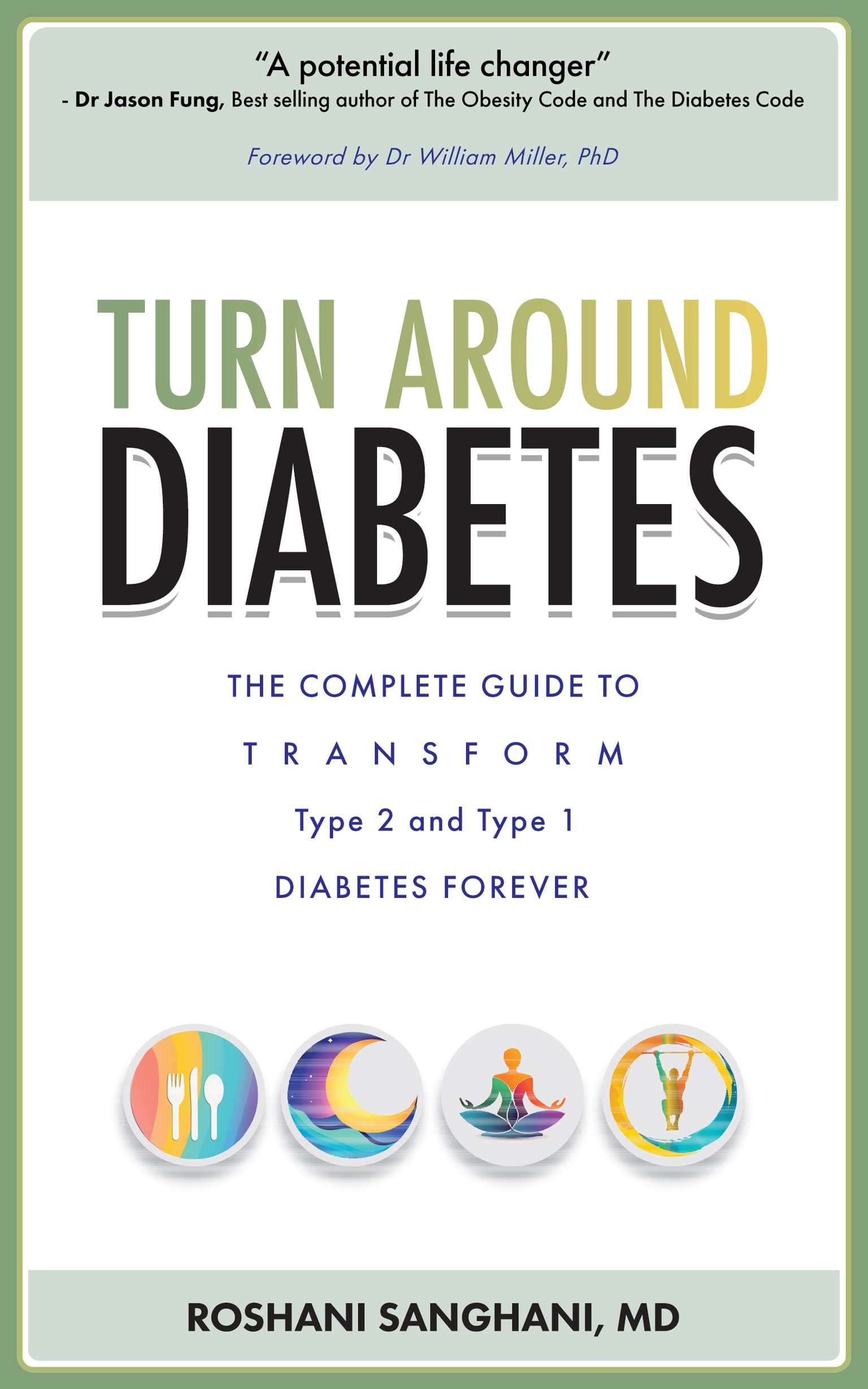
“A potential life changer.”
- Dr. Jason Fung, NYT Bestselling Author, The Obesity Code & The Diabetes Code
Endorsements include Dr. Jason Fung, Dr. Eric C. Westman, Dr. Medha Munshi, Benjamin Bikman, PhD, and William R. Miller, PhD.
The program is built to move patients from “what do I do now?” to knowing what changes their glucose, when medicines need review, and how to keep going.
A consultation with Dr. Roshani, in person in Mumbai, or online by video from anywhere in the world. Her team maps your reports, medicines, C-peptide, food, sleep, stress, movement, and glucose history before you meet. The call can focus on the pattern, not paperwork, and on the first lever worth testing.
Every 10–12 days, glucose readings, hunger, energy, symptoms, weight, sleep, stress, and medicine response are reviewed together. The cadence exists because the body can change quickly when the right lever is found.
Patients learn how meals, sleep, stress, movement, and medicines affect their numbers, so they know when to act, when to ask for help, and how to keep going without a diet chart.
Note: Working online with Dr. Roshani does not replace the need for physical examinations with your primary care provider.
Remission
HbA1c under 6.5% (the diagnostic threshold) held for 3+ months with no diabetes medication. Yes, through continued lifestyle. The goal the program works toward.
Reversal
The everyday word for the same outcome: glucose back in a non-diabetic range. Yes. Same as remission. What people mean by 'reversal' is remission.
Cure
Diabetes permanently gone, with nothing to maintain. A cure needs no maintenance. Not promised. No cure exists for Type 2 Diabetes today.
C-peptide and how long you have had the condition both shape whether remission is realistic. Read Is Type 2 Diabetes Reversible? for the fuller explanation.
Many people search for diabetes 'reversal.' The precise medical word is remission. Remission means your HbA1c stays below 6.5% (the level used to diagnose diabetes) for at least three months without diabetes medication. That is the standard definition agreed by the American Diabetes Association and other international diabetes bodies. It is not a cure: it has to be maintained. For many people, it is possible. A blood test called C-peptide shows how much insulin your pancreas is still making, which helps determine whether remission is realistic for you. Dr. Roshani has helped hundreds of patients reach it. How long you have had the condition matters too.
Yes. The C-peptide test shows how much insulin your pancreas is still making. Many patients on insulin still have a working pancreas. It is just being overwhelmed. Dr. Roshani has helped patients get off insulin with the right C-peptide levels and a structured lifestyle approach.
In India, Dr. Roshani manages medications directly once the program starts. She reviews results and adjusts as health improves. For patients outside India, she provides clinical guidance that you can discuss with your local prescriber.
Patients will be logging their food and glucometer readings into our app for the entire 3 months.
Yes. Whether you want to reduce your GLP-1, get off it, or were just advised to start one - Dr. Roshani guides patients through it safely alongside lifestyle change.
People of Indian and South Asian origin tend to carry more fat around the organs and have less muscle. The classic picture is thin arms and legs with a protruding belly. That low muscle mass comes from too little strength training and protein-deficient diets. So Type 2 Diabetes can develop at a lower body weight and progress faster than in others of similar weight, and the same HbA1c can represent a higher level of risk.
Medication helps control the number. Lifestyle helps change why it's high. The American Diabetes Association acknowledges that low-carb diets improve diabetes: better glucose with less medicine. In the DiRECT trial, published in The Lancet, around 46% of people put their Type 2 Diabetes into remission at one year through a structured weight-loss program, and 36% were still in remission at two years. When the right changes are made, many of Dr. Roshani's patients need less medication. Some need none at all.
In India, Dr. Roshani manages medications directly once the program starts. She reviews results and adjusts as health improves. For patients outside India, she provides clinical guidance that you can discuss with your local prescriber.
Yes. The program runs entirely online, so patients take part from wherever they live. Dr. Roshani has guided patients through it from Australia, Dubai, and across Africa. Patients have kept their results through weeks of continuous international travel. Medication is handled separately, depending on where you live (see 'Who will manage my medications?' above).
Yes. The approach is low-carb and flexitarian, not a fixed diet. Dr. Roshani helps patients reduce carbohydrates and increase protein with whatever food they eat: vegetarian, non-vegetarian, Jain, or vegan. No food group is eliminated. Patients find what works for their kitchen and their life.
No. Dr. Roshani's team does not hand out a diet chart or a list of forbidden foods. Instead, patients learn how their own meals affect their glucose, and why. Then they can decide what to eat in any situation, whether at home, eating out, or travelling. Most keep the foods they grew up with. A patient should finish the program able to read their own body, not follow a sheet.
Patients get a dedicated chat group with their coach and Dr. Roshani's team. The team follows progress between consultations, so when something comes up, no one is waiting for the next session to figure it out.
Most patients start feeling better within days. Glucose levels often improve within the first week. Measurable changes in blood work typically appear within 4–6 weeks.
Book your First Consultation. Patients fill in a questionnaire through the Reisaan app beforehand. Dr. Roshani's team reviews everything before the meeting. Come with your reports, your medications, and your questions.
Yes. Pay in full at sign-up, or in two payments: 50% at sign-up and 50% before your second consultation.
Most patients graduate managing independently. That is the goal of the program. Dr. Roshani's video course and teaching sessions give patients the tools to continue without ongoing hand-holding.
For patients who want continued support, maintenance options and an alumni community are available.
Underneath the next result is a longer question: about your energy, your independence, and your years with family. The consultation is where you start answering it: what is raising your glucose, what can change first, and whether this approach fits.
First Consultation ₹5,000 / USD 60 · Online worldwide · In-person in Mumbai
★ 4.8 · 236 Google reviews · 20+ years clinical experience
Watch: Dr. Roshani describes the first consultation →